Alaska Peninsula Brown Bear Hunts
These hunts take place on Alaska Peninsula National Wildlife Refuge and Aniakchak National Preserve lands, where I hold a special-use permit & concession contract for the exclusive federal concession. These 2 adjoining exclusive-use federal guide areas make up one overall area that we hunt, roughly 216,200 acres and over 108 miles in perimeter. This area has drainages that flow into the Pacific side of the Alaska Peninsula to the East and the Bering Sea side to the West, in one of the most remote and difficult-to-access parts of the Alaska Peninsula.
We have over 5 decades of experience in these respective areas. My dad began guiding here in the early 1970s and operated his entire career in these areas, and I have continued on that tradition, having guided here since the start of my career. I started going to these camps when I was a little kid and have spent over 20 years guiding in these amazing areas. This part of the state is one of the best examples of true wilderness that you will ever experience, with some of the very best brown bear hunting in the world.
Our historic main camp is located midway down the Alaska Peninsula, about 1.5 hrs via bush plane south of King Salmon, and consists of small cabins for guests and guides, a cook cabin and dining area, a bathhouse, and other structures. This is where your hunt starts. Once in main camp, you are paired with your guide or team of guides and flown to a spike camp via Super Cub, usually about a 10-15 minute flight. Spike camps consist of a large 6-person tent for the hunter, a tent for the guide(s), and usually a separate cooking/eating tent. Clients have a cot and a small propane buddy heater as needed. These camps are quite comfortable, and food is generally a combination of home-cooked and freeze-dry.
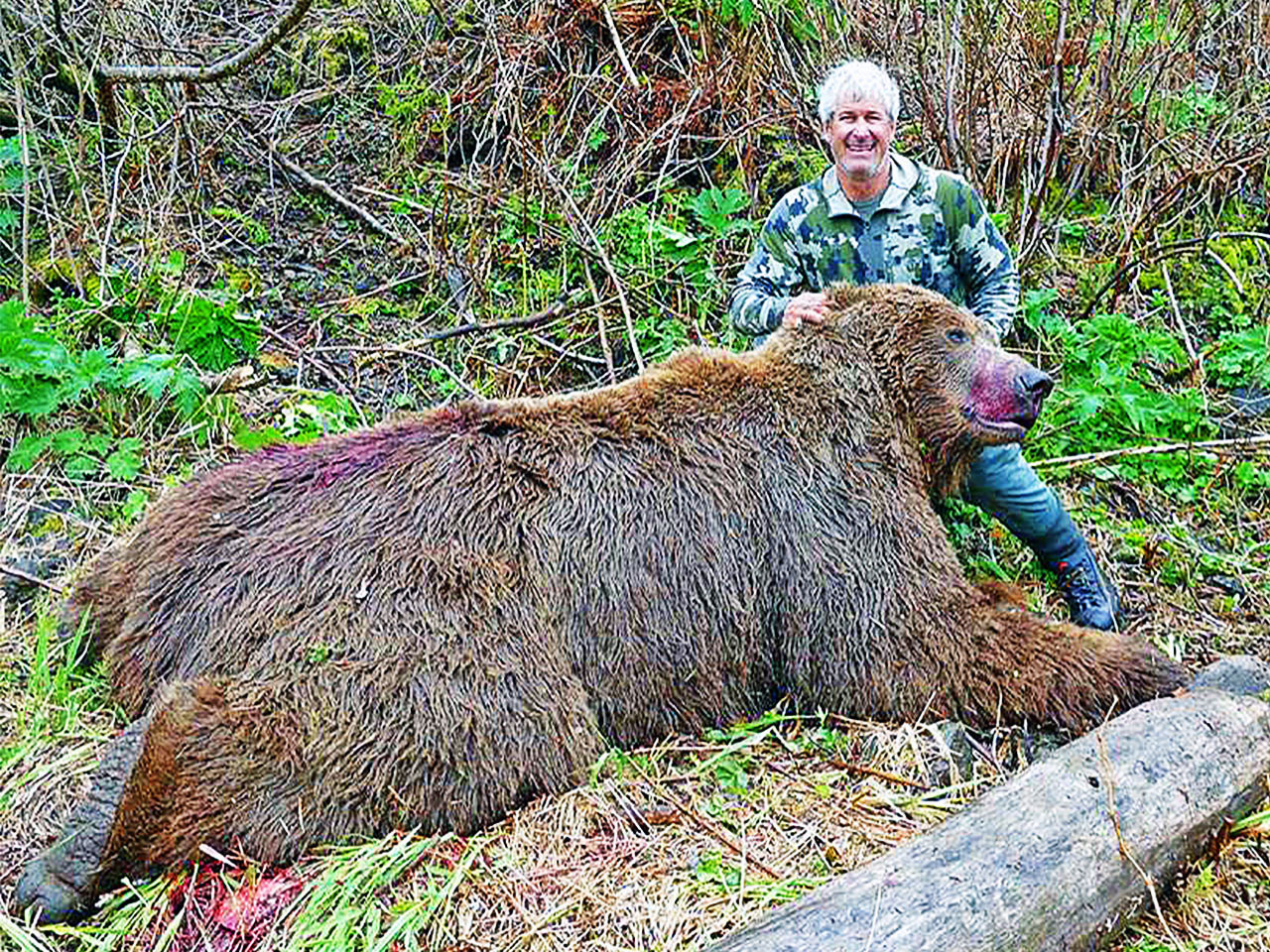
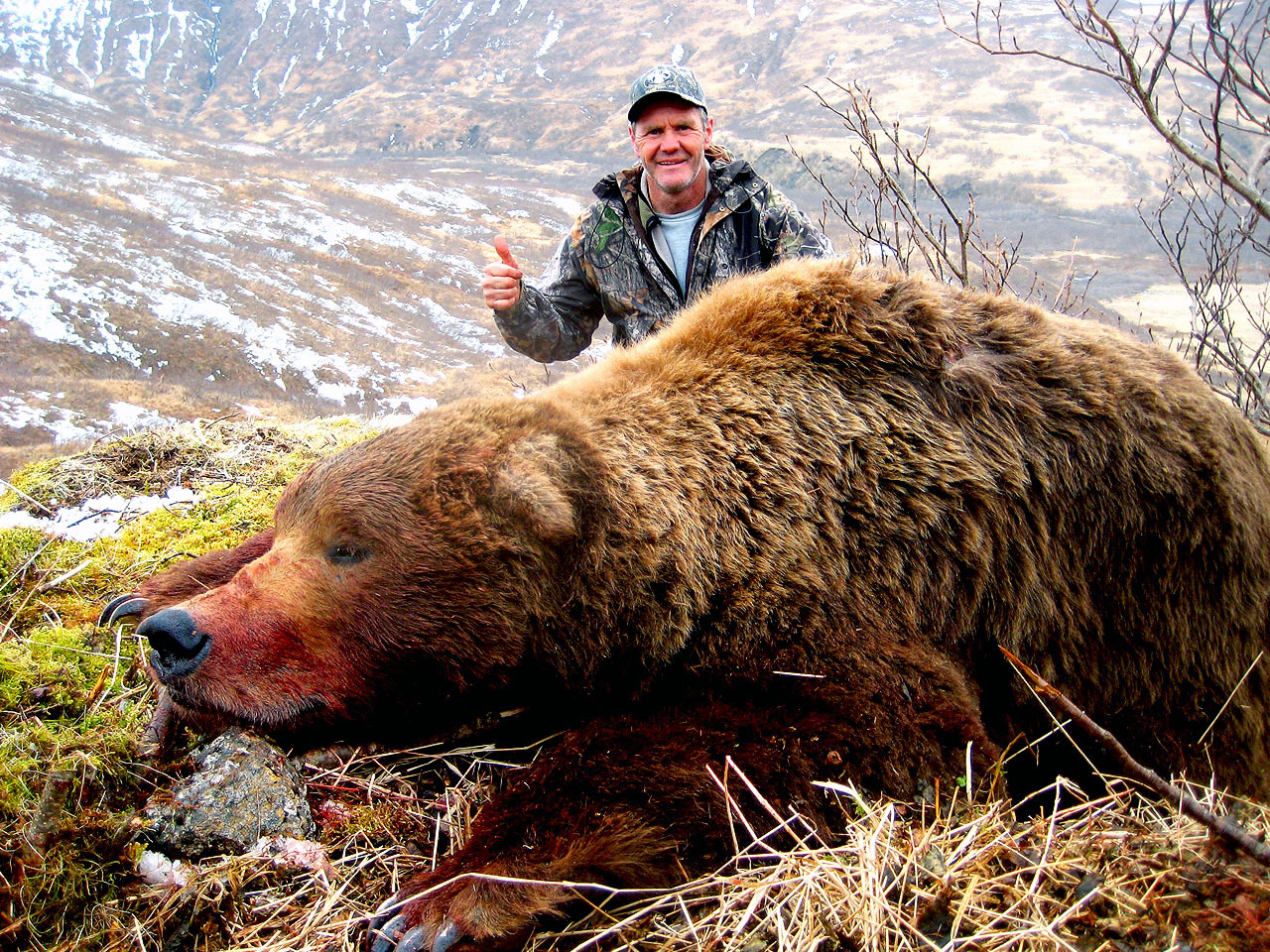
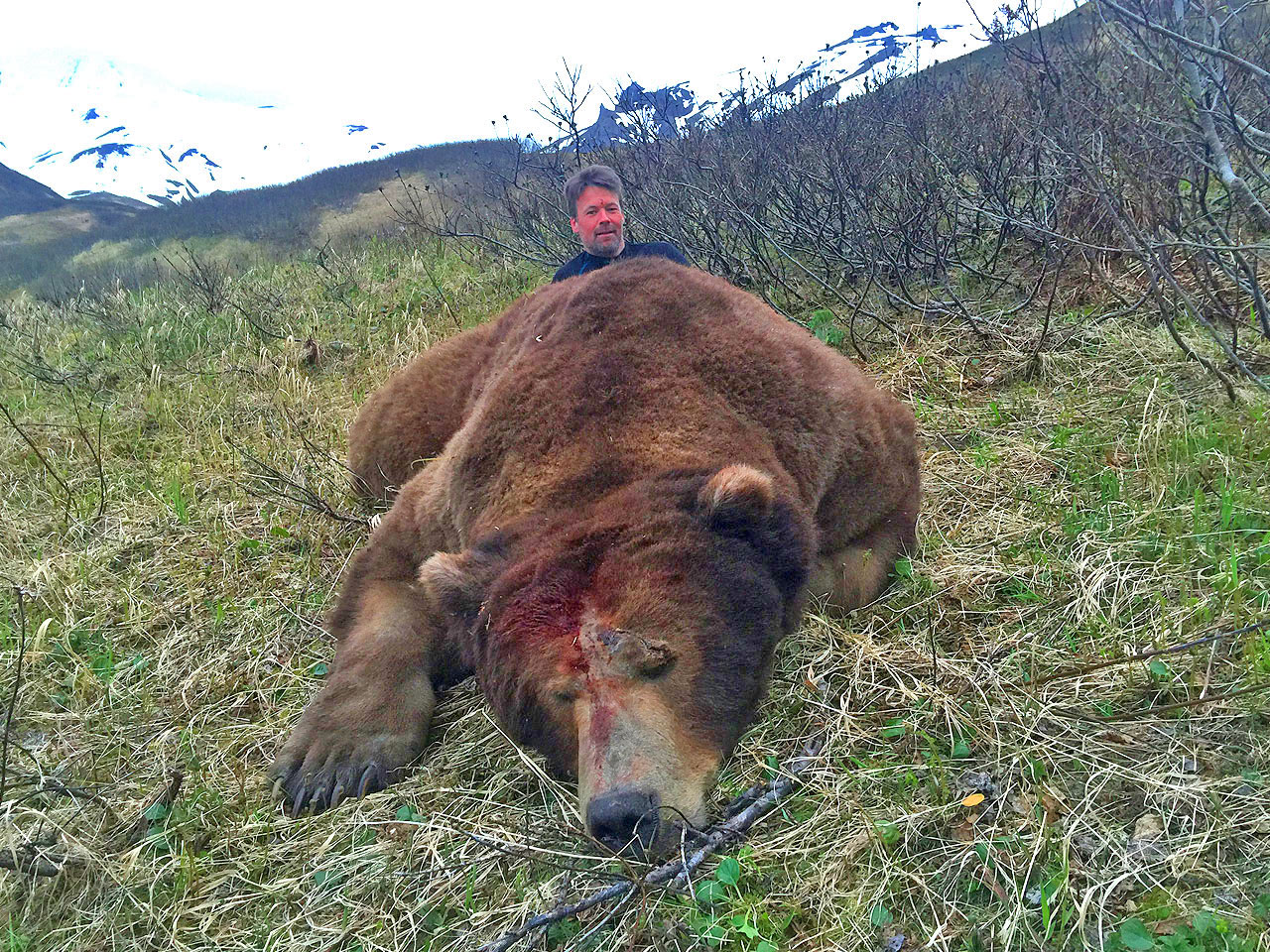
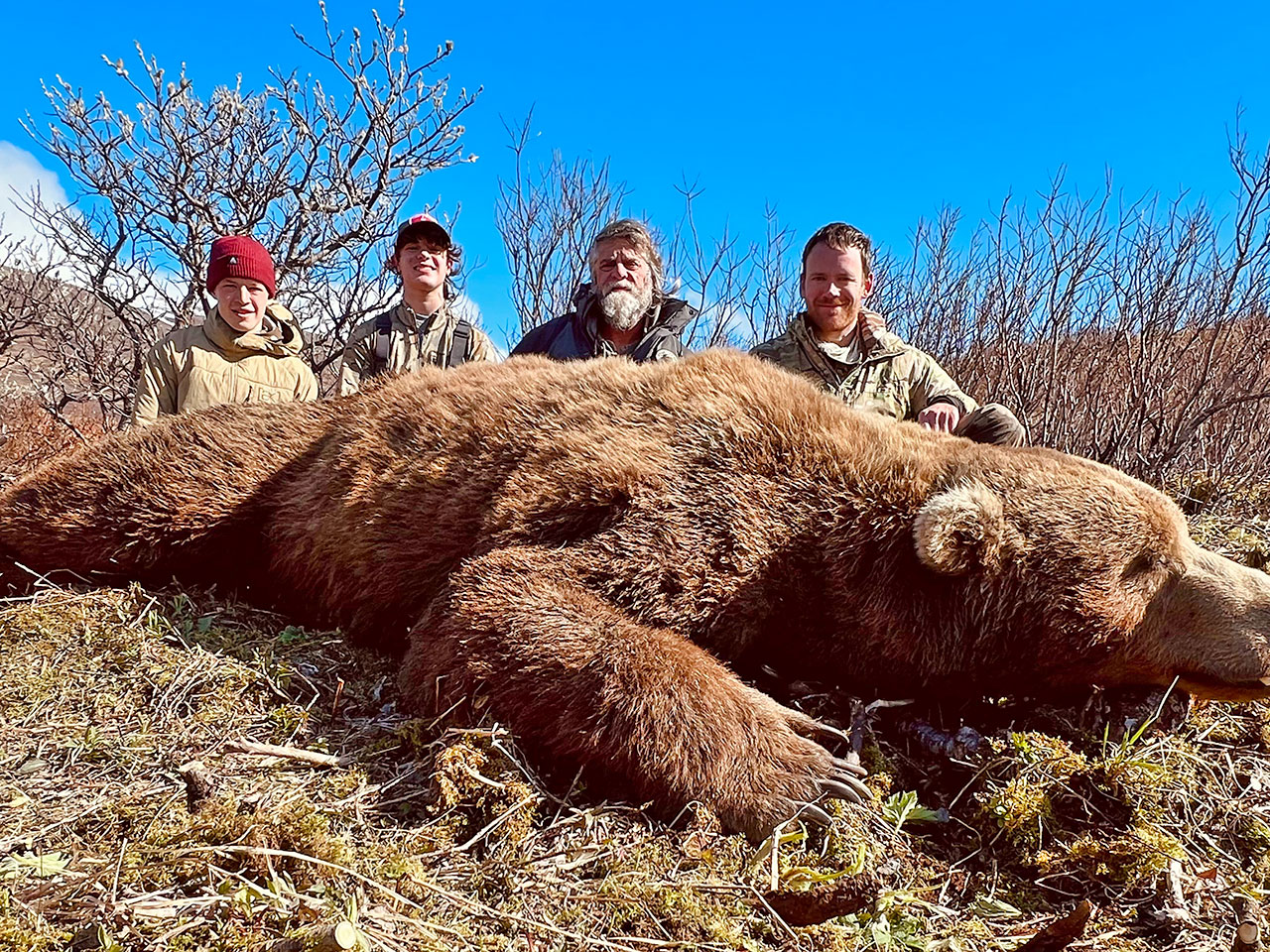
Hunt method is spot and stalk and ambush. Each day we spend many hours, usually 8-14, glassing from high points or hills. We hunt the same camp locations in the spring that we do in the fall. Success rates and sizes of Alaska Peninsula Brown Bears are even between spring and fall hunts. The primary difference between spring and fall is that in spring, boars tend to be traveling in search of sows, and in the process of breeding. In the fall, bears are focused on the many streams, which are loaded with silver salmon, as well as the berry patches. Both spring and fall offer tremendous opportunities to take top-notch bears. The bears we take on the Alaska Peninsula are 9 ft or better as a starting point, most of which go over 9 feet, many being 9 /12 and even 10+.
An Alaska Peninsula brown bear hunt is a top-tier hunt, offering some of the best true wilderness hunting anywhere in the world.